
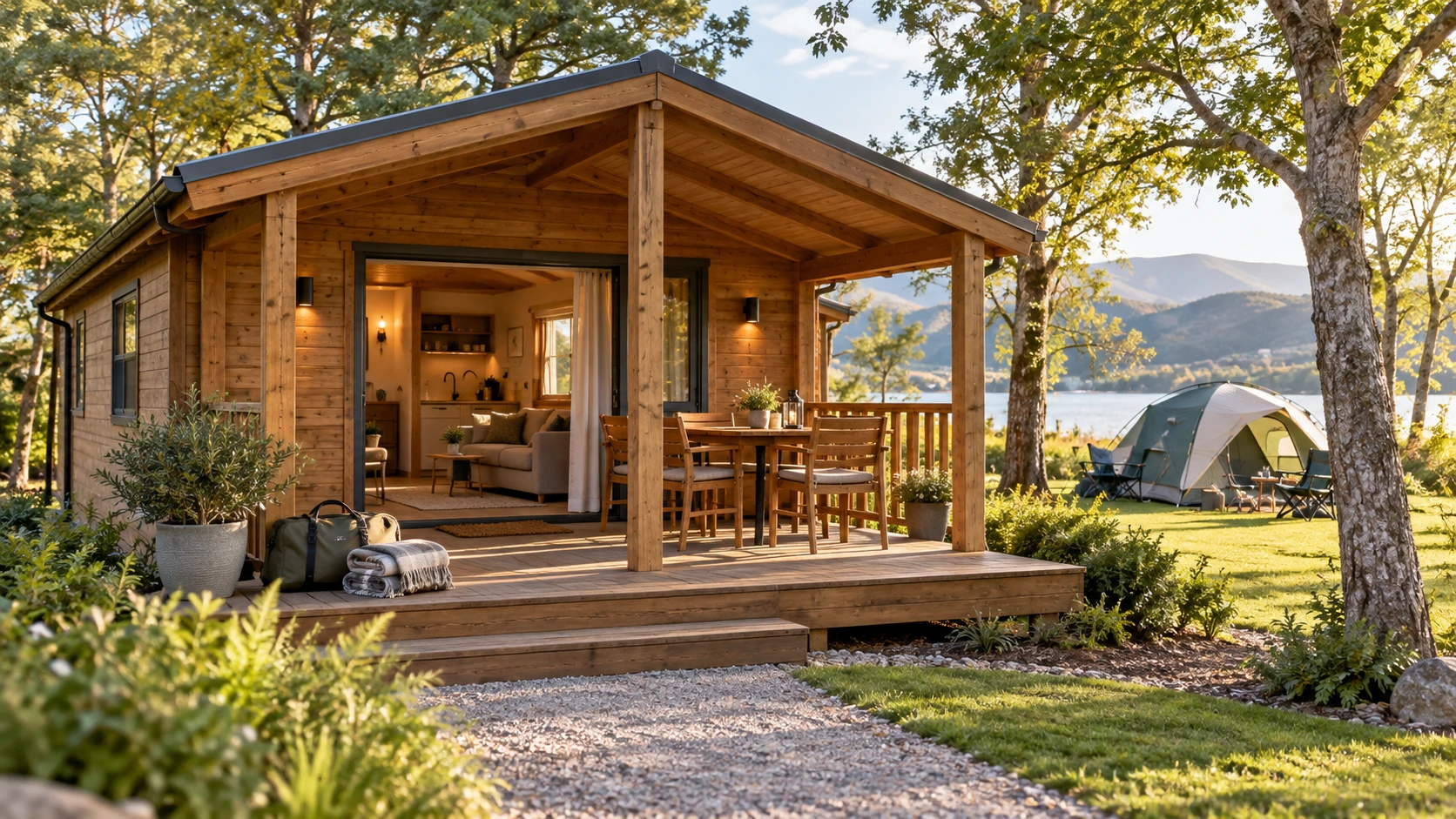
Choosing between cabin accommodation and tent camping often comes down to how much work you want to do before leaving home. Both can make for an enjoyable family holiday, but they ask different things of you. A cabin usually removes the need to bring and pitch a shelter. Tent camping gives you more control over your setup, provided you are willing to plan, pack, and check the equipment. The easier choice depends on what the accommodation includes, the weather, and how comfortable your group is outdoors.
What preparation does a cabin remove?
The clearest advantage of a cabin is that the structure is already in place when you arrive. You do not need to choose a tent, test its poles or find room in the car for groundsheet and pegs.
That does not mean a cabin holiday is entirely ready-made. Cabins vary in size and equipment, so check the booking details before packing. Find out whether bedding, towels, kitchen equipment and cleaning supplies are included. Also confirm how you will collect the key, particularly if you expect to arrive outside reception hours.
Meals still need thought. If the cabin has cooking facilities, you may be able to bring ordinary groceries and prepare familiar food. If it does not, plan around the shared kitchen, restaurant, or other options available at the campsite.
What does tent camping add to the list?
With tent camping, you bring your sleeping space with you. That adds several decisions before you travel: whether the tent fits your group, where everyone will sleep, how you will keep belongings dry, and what you will do if the weather changes. Sleeping mats and warm bedding can matter as much as the tent itself, especially when nights are cooler than expected.
If you have not used your tent recently, put it up at home or at least check that its parts are present. Discovering a missing pole after arrival is far harder to solve than finding it in your garage. Make sure you know how long setup takes and that the people helping can manage it. Even an experienced camper benefits from packing the items needed first where they are easy to reach.
A tent also requires some thought about the pitch. Check campsite information for available space and any rules that affect how you set up. A family carrying a large tent, several chairs, and outdoor cooking gear may have a different space requirement from two people with a compact tent.
For more detailed information on this topic, read our guide on How to Plan Easy and Enjoyable Meals for a Family Camping Trip.
How do weather and arrival time change the answer?
A fair-weather weekend can make tent camping feel straightforward. Rain or a late arrival changes the workload. Pitching in fading light while keeping luggage dry takes more effort than arriving at a cabin and carrying bags inside. If your travel plans are uncertain, ask how check-in works and when you can access your accommodation or pitch.
For example, imagine a family driving to a campsite after a full day of travel. With a cabin, their main arrival tasks may be finding the key and unloading essentials. With a tent, they also need enough time and light to set up a comfortable sleeping area. That does not rule out camping, but it makes an earlier departure or a simpler tent setup more valuable.
Weather matters after arrival, too. A cabin provides an indoor place to gather when outdoor plans change. Tent campers can still enjoy a rainy break, but they need suitable clothing, a way to manage wet gear, and a practical plan for meals. The more changeable the forecast, the more useful those preparations become.
Compare the whole trip, not just the packing list
Less preparation does not always mean a cabin is the better choice. Tent campers who already own reliable equipment and know their routine may pack quickly. Someone booking a cabin for the first time may need to check more details about its contents, sleeping arrangements, and departure requirements. Experience changes the amount of work each option demands.
Think about how you expect to spend your days. If you plan long outings and mainly need an easy place to return to, a cabin may reduce the work at either end of the day. If setting up camp and spending time outdoors are part of the holiday you want, preparing a tent can feel worthwhile. Families with young children may give extra weight to how easily they can manage bedtime, wet clothes and early mornings.
The facilities around the accommodation can also simplify either choice. Camping guests have access to sanitary facilities, a guest kitchen with ovens, and laundry facilities. Those shared amenities can reduce what tent campers need to bring for washing and cooking, though they do not replace the need for a suitable shelter and sleeping gear. Check which facilities you expect to use and how access works during your stay.
A quick comparison before booking helps keep the decision practical:
- For a cabin: Confirm what is supplied, what you must bring, and how arrival works.
- For a tent: Check your equipment, pitch needs, weather plan and likely setup time.
- For either option: Plan meals, clothing and transport around the people travelling with you.
Which requires less preparation?
For most first-time visitors, cabin accommodation will require less equipment planning and less work on arrival. Tent camping generally asks for more preparation because your comfort depends on the gear you bring and how you set it up. The gap narrows when you have a familiar tent and a packing routine.
Choose based on the work you are happy to do, rather than on the label alone. Check the details of the cabin or pitch, consider your arrival time, and pack for the conditions you may meet.